
A Guide for the Responsible Use of Artificial Intelligence
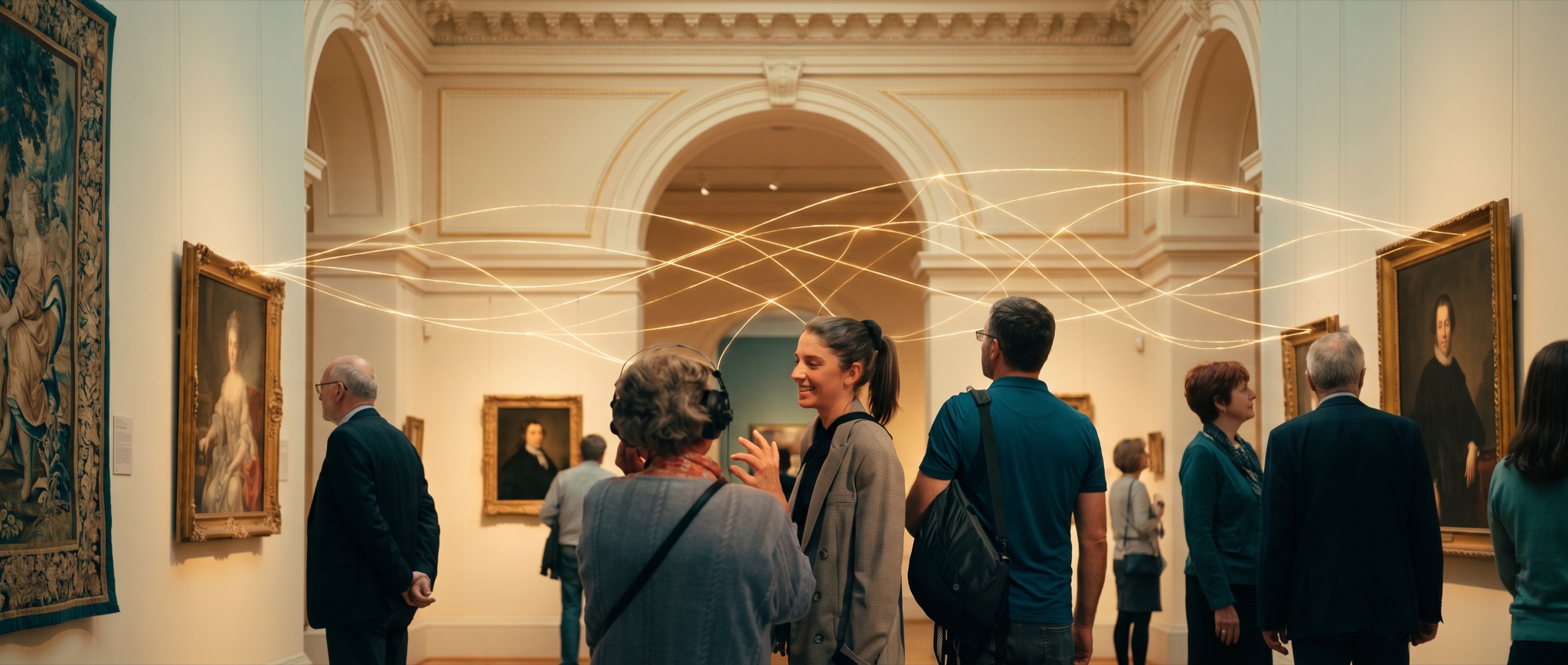
Artificial Intelligence (AI) is rapidly transforming the cultural and creative sectors (CCS), offering new opportunities for collection management, audience engagement, and interpretation. Yet, many institutions face uncertainty about how to adopt AI responsibly. This guide addresses that gap by providing practical steps, tools, and reflections for museums, galleries, and cultural organisations.
What this guide offers
- Foundations: Clear explanations of AI concepts (algorithms, machine learning, generative AI, LLMs) and associated risks.
- Applications: A structured overview of AI use cases in the CCS, from collection digitisation to visitor experience enhancement, with real-world examples.
- Case studies: In-depth insights from Wondercut, Bauhaus Infinity Archive, and other projects illustrating technical, ethical, and organisational lessons.
- Implementation framework: Guidance on strategy development, stakeholder mapping, AI literacy, and sustainability planning.
- Ethics and governance: Dos and don’ts for responsible AI, risk mitigation strategies, and compliance with GDPR and the EU AI Act.
- Resources: Curated literature, toolkits, and training opportunities to build capacity and foster sector-wide knowledge sharing.
Responsible AI use involves more than ticking boxes or following guidelines. It is about aligning technology with cultural values, public trust, and institutional missions. In our understanding, AI should serve as a facilitator to enhance cultural experiences while safeguarding privacy, fairness, and authenticity. This guide offers practical, context-sensitive support and to encourage experimentation. Its purpose is to help professionals in the CCS make informed decisions, ensuring that innovation remains ethical, sustainable, and inclusive.
Downloads
Download the guide — English (PDF) ↓Leitfaden herunterladen — Deutsch (PDF) ↓Prenesi vodnik — Slovenščina (PDF) ↓
Working together with






.png)